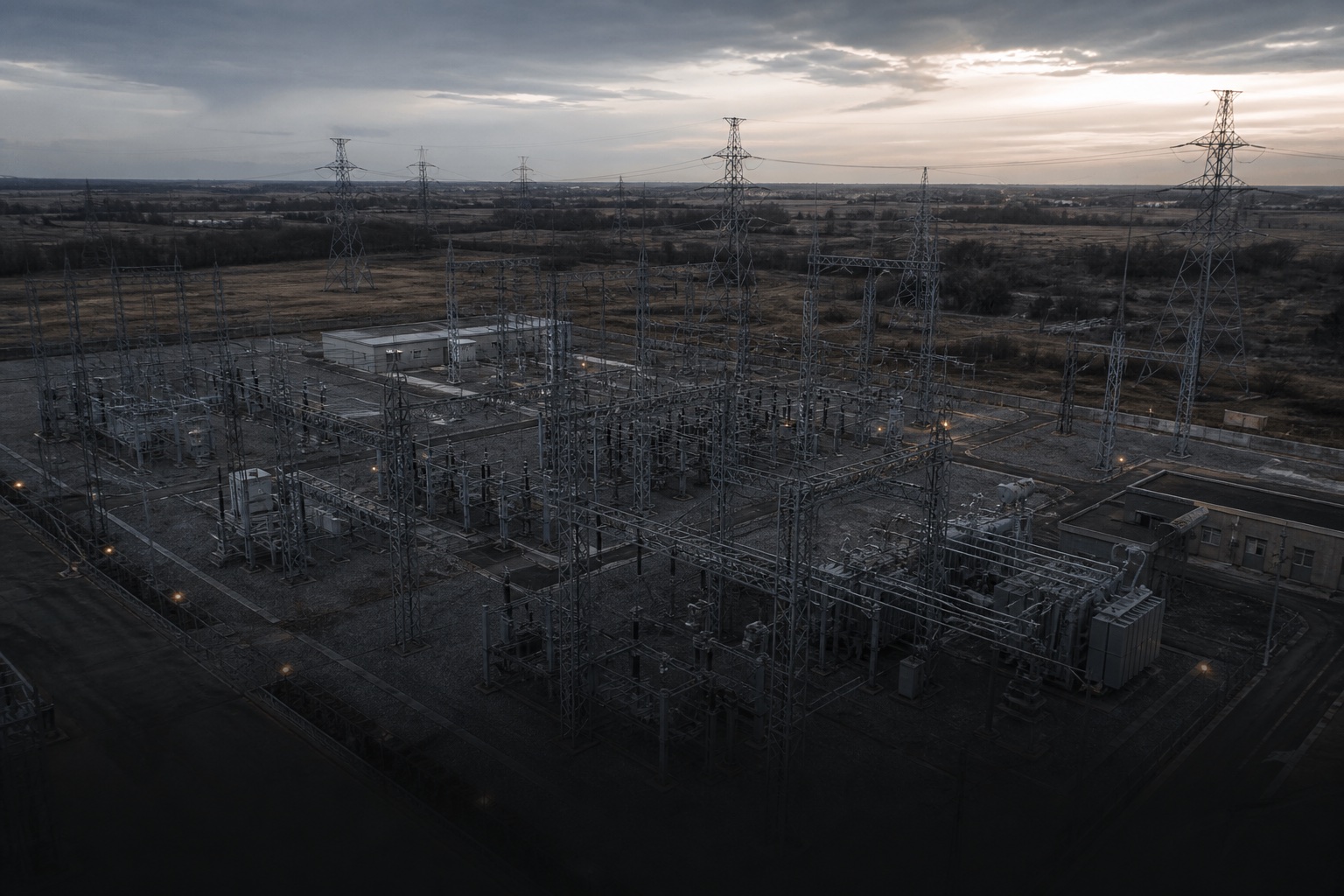
Launch
The drone leaves its dock on schedule, or in response to an approved alert.
Veyl Physical / Drones
Veyl Physical is a managed autonomous drone inspection and site-monitoring system. It launches from a dock, captures RGB and thermal data, verifies what changed, and returns a usable report.
See how it works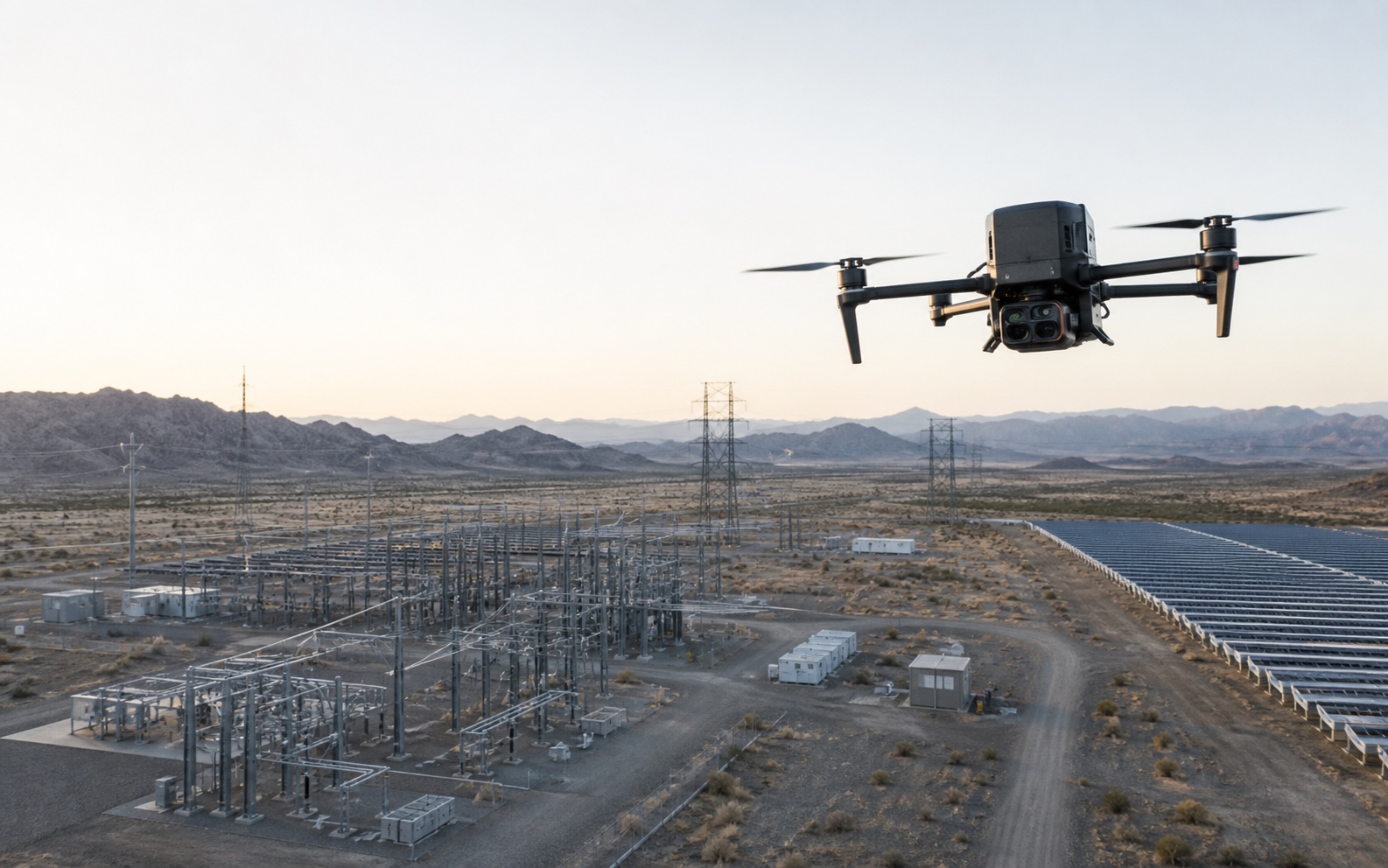
Substation thermal inspection
The system
Veyl combines proven aircraft, autonomous missions, thermal and visual sensing, and human oversight. We run the system. Your team sets the site priorities and approves the rules.
The drone leaves its dock on schedule, or in response to an approved alert.
It flies a repeatable route, captures RGB and thermal data, and flags what changed.
Exceptions are reviewed against site rules before they become operational decisions.
Your team receives the finding, the source evidence, the location, and the next action.
Operating envelope
Nothing about the mission is improvised in the air. The aircraft, the route, the sensors, and the limits are agreed and written down first.
Veyl Physical is pre-deployment. These are the boundaries the first pilot is scoped to, not results we have published.
Initial missions
One platform can begin with a narrow inspection route and expand into persistent site awareness as the evidence grows.
Repeatable thermal and visual capture makes change visible across flights, not just within a single inspection.
Cover large sites with consistent sensor angles, flight paths, and evidence.
Launch, stream the scene, document what changed, and return to dock.
Field guide
A flight is not the outcome. A useful inspection makes the route, measurement conditions, evidence, and decision repeatable enough for an operator to act on.
Use defined viewpoints, altitude, sensor angles, and capture timing so changes between missions are interpretable.
Record environmental and sensor conditions that affect RGB and radiometric thermal imagery.
Keep the source image, asset location, timestamp, comparison point, and review history together.
Define who reviews an exception and what maintenance, security, or follow-up action it can trigger.
Radiometric thermal cameras record temperature patterns across an asset. Those patterns can surface heat anomalies in electrical equipment, solar modules, pipelines, roofs, and industrial machinery. A thermal anomaly is evidence for review, not a diagnosis by itself. Load, weather, emissivity, viewing angle, distance, and sensor settings can all change the reading.
Autonomy does not remove aviation responsibility. In the United States, commercial drone operations must follow the applicable FAA rules. Some missions, including operations beyond visual line of sight, may require specific authorization or a waiver. Veyl scopes the flight plan and approval path before a pilot begins. See the FAA’s current Part 107 guidance.
Each finding should include the affected asset, precise location, source RGB or thermal evidence, comparison to the approved baseline, confidence or review status, and the next action. Veyl keeps that output tied to the mission that produced it.
Veyl Physical is selecting first pilot sites. This field guide describes the operating standard for the proposed system, not published customer performance.
Managed autonomy
Veyl begins with proven commercial aircraft and sensors, then adds the mission logic, operating controls, and data workflow needed to deliver an outcome. Who owns what is explicit from the first flight.
01 / Veyl operates
We deliver the inspection system and keep it working.
02 / Your team decides
You set the boundaries and remain in control.
The first pilot
StatusSelecting first sites
We start with one valuable, repeatable mission. Together we set its limits, run it, verify the result, and decide whether it deserves to expand.
Discuss a pilotSelect one high-value inspection or monitoring route.
Map the site rules, risks, approvals, and stop conditions.
Repeat the mission and validate every finding.
Use the result to decide whether the workflow grows.
Autonomous drone inspection uses a preplanned mission, commercial aircraft, and visual or thermal sensors to inspect an asset repeatedly with consistent routes and evidence. Veyl manages the aircraft, mission, review, and report as one system.
The initial scope includes substations, power lines and transmission assets, solar farms, pipelines, industrial equipment, logistics sites, and large critical-infrastructure perimeters. Every pilot starts with one site and one bounded mission.
Radiometric thermal imagery can reveal temperature differences that may indicate hot electrical components, underperforming solar modules, or abnormal industrial equipment. The exact detectable conditions depend on the sensor, environment, and approved inspection rule.
A drone stays protected and charged in an on-site dock. It can launch for scheduled perimeter patrols or an approved alarm, stream visual and thermal context, document what changed, return to the dock, and recharge.
Where the mission requires them, Veyl can scope georeferenced imagery, change maps, orthomosaics, or 3D site models. Any survey-grade deliverable is defined separately with the required controls and qualified professionals.
Cost depends on the site size, route, sensor package, flight cadence, operating constraints, and required outputs. We begin with one scoped site and one measurable inspection or monitoring mission before anything expands.
Not initially. We begin with proven commercial aircraft and sensor hardware, then focus on autonomy, data, operations, and mission reliability.
Flights run under a licensed remote pilot and the site's approved operating rules. Autonomy works inside a defined envelope, and a named person stays accountable for the decision to fly.
The capture, findings, and reports belong to you. Retention window, storage location, and access are agreed in writing before the first flight.